
Executive summary
International SMS lets a business send verification, notification, and marketing messages to mobile numbers across countries and carriers. The right provider should be evaluated on route quality, local compliance, speed, delivery receipts, and support, not price alone.
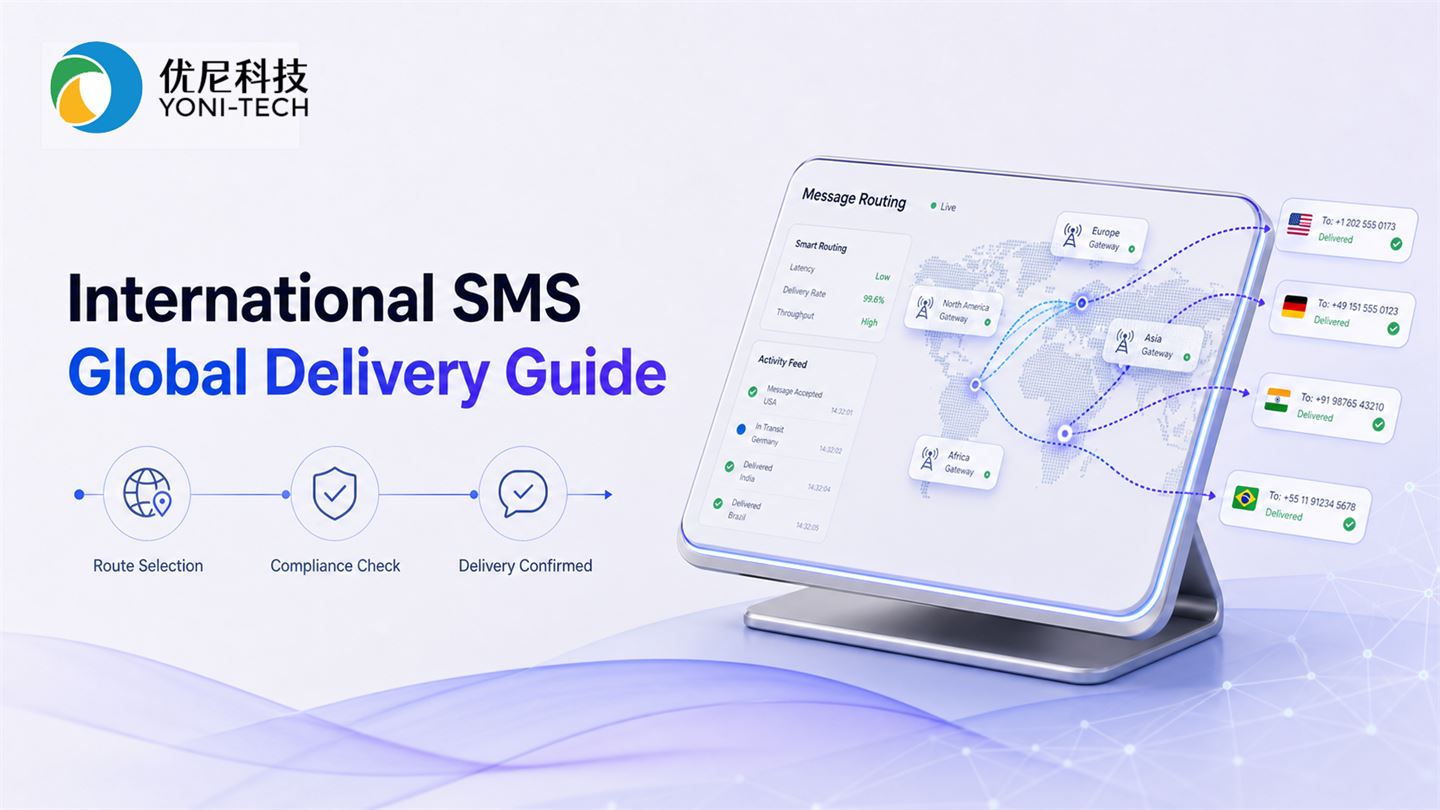
How international SMS reaches a user
After a business submits a message through an API or dashboard, the messaging platform selects a route based on the destination country, carrier, and message type. The local mobile network then delivers the text to the user. Delivery receipts report whether the message was submitted, delivered, or failed.
- Verification: registration, login, and payment authentication
- Service notifications: orders, delivery, appointments, and account alerts
- Marketing and re-engagement: promotional messages sent with valid consent
Five factors that affect SMS delivery
| Factor | Why it matters | How to evaluate it |
|---|---|---|
| Route quality | Direct routes usually provide a clearer path and receipt data | Review delivery and latency by country and carrier |
| Number quality | Inactive numbers create wasted sends | Validate and clean numbers before campaigns |
| Content compliance | Sensitive content, links, or templates may be filtered | Maintain country-specific content rules |
| Sender identity | Some markets require Sender ID registration | Confirm lead time and documentation |
| Traffic pattern | Sudden spikes can trigger throttling or risk controls | Plan capacity and define retry rules |
How to choose an international SMS provider
Start with your priority markets and test with representative traffic. Do not rely on a single average delivery rate. Break results down by country, carrier, message type, and time period. A dependable platform should also provide clear receipts, failure reasons, rate limits, and an escalation path.
- Coverage that matches priority markets, not just a large country count
- Separate routing strategies for verification, notification, and marketing traffic
- Real-time receipts, message logs, and useful failure codes
- Guidance on Sender ID, template, consent, and opt-out requirements
- Transparent pricing that accounts for retries and additional fees
Separate A2P, OTP, notification, and marketing traffic
The hard part of international SMS is not only whether a message can be sent. Each message type has different compliance, routing, and user-experience goals. A single policy for all traffic can let marketing volume slow down verification or cause stricter filtering for transactional content.
| Message type | Primary goal | Operating focus |
|---|---|---|
| OTP | Complete sign-up, login, or payment verification quickly | Low latency, stable receipts, fallback channels |
| Transactional notification | Confirm orders, shipping, and account changes | Brand recognition, accurate delivery, failure alerts |
| Service reminder | Reduce no-shows, missed updates, and repeated support questions | Time zones, frequency, user preference |
| Marketing SMS | Reach opted-in users and drive conversion | Consent proof, opt-out handling, content review |
Launch checklist for a new SMS market
- Confirm whether the country requires Sender ID, template, or brand registration
- Prepare separate templates for OTP, notification, and marketing use cases
- Run a small live-number test and record latency, receipts, and failure reasons
- Check opt-out, privacy, marketing consent, and sensitive-industry rules
- Define rate limits, backup routes, and support scripts for exception markets
Frequently asked questions
Is international SMS always more expensive than local SMS?
No. Pricing depends on the destination, carrier, route type, and volume. A cheaper route with weak delivery can produce a higher cost per successful customer interaction.
How is A2P SMS different from person-to-person texting?
A2P SMS is sent from an application or business system to users, usually for verification, notifications, or marketing. It is commonly subject to sender identity, template, opt-out, and local compliance requirements.
Does every market require Sender ID registration?
No, but many markets restrict unregistered or inconsistent sender identities. For priority countries, confirm documentation and approval lead time before launch so delivery is not blocked after go-live.
Which metrics matter most for OTP messages?
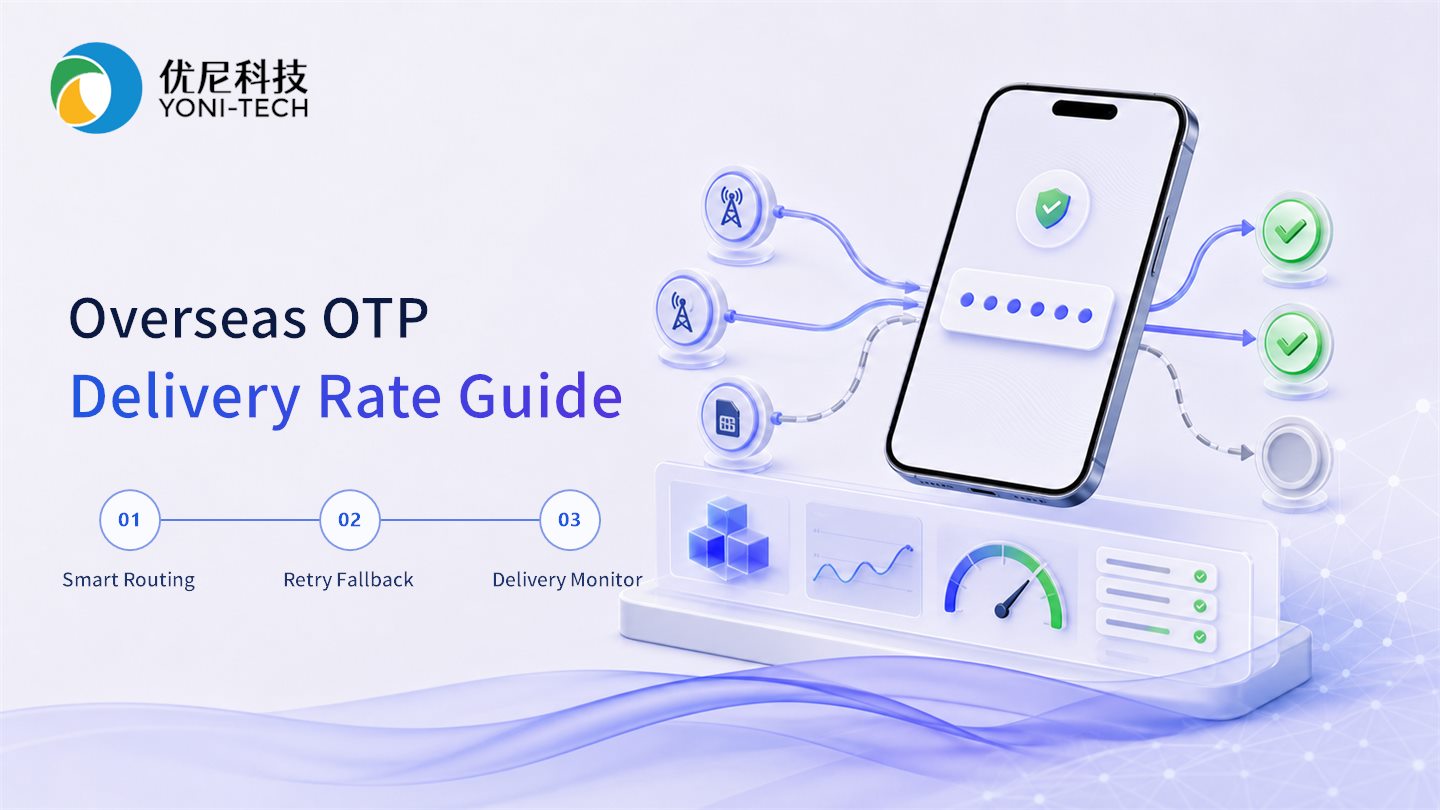
Focus on end-to-end latency, successful delivery, peak-hour stability, and failover. OTP messages expire quickly, so delivery speed is often more important than the lowest unit price.


 SMS
SMS  WhatsApp